Insight
The next generation ready to rebuild Britain
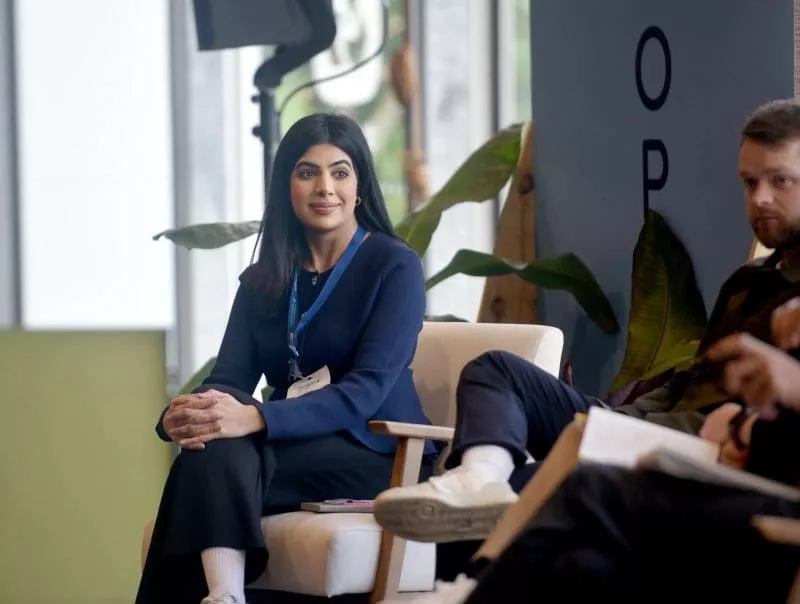
In rooms set aside for Anthropy’s Emerging Leaders program, the next generation of Britain’s decision-makers were asking a simple question: what kind of country are we building, and who gets to shape it?

Last year, the message from Anthropy’s Emerging Leaders was clear. Young professionals from across business, government, not-for-profit and civil society spoke candidly about the barriers standing between their generation and opportunity.
Some described “an antiquated and unfit-for-purpose education system”, while others argued that future-facing capabilities, such as creativity and empathy, remain undervalued in the economy.
Yet the tone was far from cynical. Emerging Leaders expressed strong optimism about Britain’s future, and a belief that they themselves have a role in shaping it.
What they wanted was not token representation, but genuine participation. As one participant put it, young leaders don’t simply want a seat at the table, they want to help build the table itself.
This year, rather than revisiting the same debates, Anthropy’s Emerging Leaders sessions are designed to move the conversation forward – shifting from identifying problems to exploring solutions around opportunity, community, and national cohesion.
Young leaders don’t simply want a seat at the table, they want to help build the table itself.
A generation defined by human skills
For a generation entering a workforce shaped by AI, climate transition and economic uncertainty, leadership looks very different from the models they inherited.
When they were asked what skills future leaders should prioritize, their answers were strikingly human: empathy, open-mindedness, inclusivity, innovation.
Emotional intelligence, mentoring and honesty were cited as the qualities that inspire them most in established leaders. And in an AI-driven world, they believe those capabilities will only become more valuable.
These human strengths can’t be automated and therefore may define the leadership of the future. Creativity, in particular, has emerged as a powerful theme across the discussions.
Britain’s creative industries already contribute roughly 6% of the country’s economic output and employ 2.4 million people, growing at more than twice the rate of the wider economy.
Yet Emerging Leaders worry the systems designed to nurture these capabilities are failing to keep pace.
Breaking the barriers to opportunity
One of the strongest concerns raised by emerging leaders was the growing sense that opportunity itself is becoming harder to access.
Rising living costs, unequal access to networks and widening regional disparities have combined to create what some describe as a “future on hold” for many young people.
This year, we’re inviting participants to move beyond diagnosis and begin identifying practical interventions, from improving social mobility pathways to addressing the pressures shaping young people’s working lives.
Rather than positioning youth as passive recipients of policy, Emerging Leaders will be placed at the center of designing solutions, asking what practical changes could meaningfully improve opportunity and resilience. It’s a shift from commentary to co-creation.
We’re inviting participants to move beyond diagnosis and begin identifying practical interventions, from improving social mobility pathways to addressing the pressures shaping young people’s working lives.
Rebuilding community in a fragmented economy
Economic stagnation, remote working and the pressures of modern life have reshaped how people connect with one another, sometimes leaving individuals feeling more isolated despite being digitally connected.
For younger professionals entering the workforce, that sense of disconnection can be particularly acute.
The question being explored this year is whether rebuilding genuine community – across workplaces, neighborhoods and civic institutions – might be one of the most powerful levers for strengthening both wellbeing and economic resilience.
If belonging becomes a public asset rather than a private commodity, it could reshape how societies think about prosperity.
What can we do differently?
Britain, like many countries, is experiencing growing social, political, and cultural division. Trust in institutions is fragile, and many citizens feel disconnected from the systems meant to represent them.
In response, young leaders are experimenting with a new idea: what might the Emerging Leader charter look like for a more united Britain look like?
This invites participants to draft principles and commitments across social, economic, environmental and political themes not as abstract ideals, but as practical commitments that people can take back into their communities and organizations.
The aim is less about producing a final document than about creating a space where collaboration across sectors and generations becomes possible.
From listening to leadership
This year’s Emerging Leaders program reflects a broader shift.
Previous discussions revealed a generation eager to contribute but frustrated by the structures around them.
The aim is less about producing a final document than about creating a space where collaboration across sectors and generations becomes possible.
This year’s sessions suggest something more hopeful: a generation ready not just to critique the system, but to help redesign it.
They want organizations that prioritize creativity alongside efficiency. Workplaces that value empathy as much as expertise. And leadership that listens as much as it directs.
They’re not waiting for permission to shape Britain’s future. But are Britain’s institutions ready to let them?
Become an Emerging Leader
Are you between the ages of 18 and 30 and want to become an Emerging Leader? Contact us to join.

About the author: Harry Tyler, Senior Consultant
Harry Tyler is co-chair of the Emerging Leaders program at Anthropy26.
Share this page
Related Topics