Insight
How do you turn AI adoption into business transformation?
Most organizations don’t have an AI problem but a people problem: the silos, fear, and lack of capability that stop good technology from becoming real transformation.

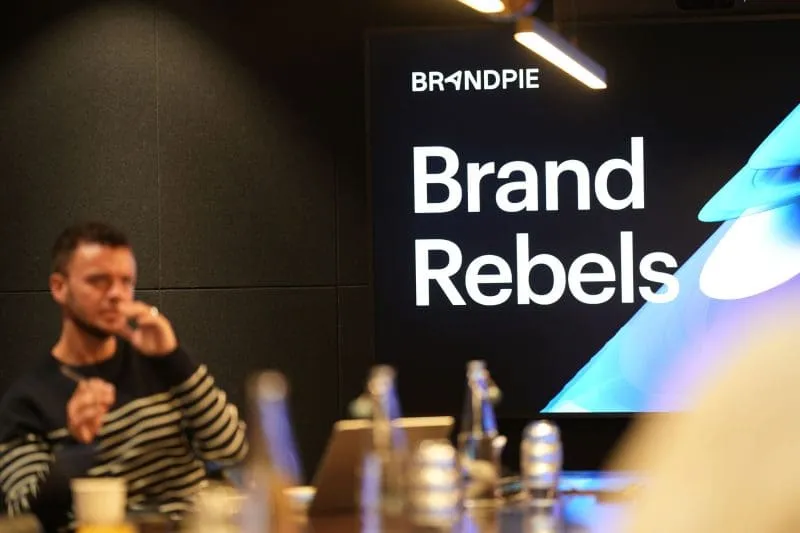
Artificial intelligence dominated conversations at both Nordic Growth Summit in Stockholm and The Foundry in Mandal. But despite different audiences, industries, and company stages, one theme emerged repeatedly: most organizations aren’t struggling to access AI, they’re struggling to turn it into meaningful change.
The conversation has shifted considerably over the past year. Leaders are asking how to embed AI into their organizations, workflows, and ways of working, and why, despite significant investment, so many initiatives continue to underdeliver.
The answer is rarely the technology itself.
But despite different audiences, industries, and company stages, one theme emerged repeatedly: most organizations aren’t struggling to access AI, they’re struggling to turn it into meaningful change.
The challenge is no longer access
Most organizations have already invested in AI tools and given employees room to experiment. But introducing technology is only one part of the equation.
The organizations seeing the greatest impact are not simply deploying more tools. They are redesigning workflows, removing friction, and fundamentally rethinking how work gets done. They are changing behavior, not just infrastructure.
Adding new technology to old ways of working only works to create noise.
Three barriers that technology alone can’t solve
Across both events, the same internal obstacles surfaced repeatedly and none of them are primarily technical:
Organizational silos
Traditional operating models require work to move through multiple functions before decisions are made or action is taken. As the pace of business accelerates, those handovers become increasingly costly. The organizations moving fastest are finding new ways to bring together technology, data, commercial teams, and leadership around shared goals, dissolving the internal complexity that slows everything down.
Employee fear
Anxiety about AI is not a niche concern. For many teams, the question behind every new tool is not “How do I use this?” but “What does this mean for my job?” When that fear goes unaddressed, adoption stalls, not because people resist change, but because no one has helped them understand what the change is actually for. Organizations that treat AI deployment as a communications challenge, not just an implementation one, move significantly faster.
Underinvestment in training
Access to tools without the capability to use them well is a recipe for frustration. Many organizations are discovering that deploying AI without investing meaningfully in how people learn to work alongside it produces limited results and erodes confidence faster than it builds it. The gap between tool availability and workforce readiness remains one of the most underestimated barriers to transformation.
Together, these three barriers point to the same conclusion: for many organizations, the greatest obstacle to growth isn’t market opportunity but internal complexity: organizational, psychological, and structural.
Why leadership matters more than ever
Successful AI adoption is increasingly a leadership challenge.
Leaders need to create clarity around priorities, help teams navigate uncertainty, and ensure that new technologies are connected to business outcomes and not scattered across isolated experiments that never scale. Without clear direction, even the most sophisticated tools struggle to deliver value.
For many organizations, the greatest obstacle to growth isn’t market opportunity but internal complexity: organizational, psychological, and structural.
This is where many organizations discover that transformation is fundamentally a human challenge. People need to understand why change is happening, what it means for them personally, and how they contribute to what comes next. When that clarity is absent, the fear and friction described above harden into resistance.
The role of brand in transformation
During periods of transformation, the role of brand is strategic.
A strong brand provides a shared understanding of purpose, direction, and ambition. It helps align teams, support decision-making, and create consistency across an organization navigating change. When leaders are asking employees to work differently, a coherent brand narrative is one of the most effective tools for making that ask feel meaningful rather than imposed.
It also helps address the fear factor directly. When people understand where the organization is going and why, they are better positioned to see their own role in that future, and less likely to experience new technology as a threat.
Turning technology into momentum
The conversations at Nordic Growth Summit and The Foundry reinforced a consistent lesson: technology creates opportunity, but transformation happens when organizations align people, processes, and purpose around it.
The companies creating the greatest value from AI are the ones investing in clarity, capability, and confidence, addressing the human barriers that technology alone cannot remove.
Because the bottleneck to AI transformation is rarely the AI.

About the author: Monique Berntsen, Head of Nordics
Monique works with leadership teams to bring clarity to growth through brand and communication strategy. She brings extensive experience from international scale-ups and complex organizations, having led brand, marketing and communications across multiple European markets.
Share this page