Insight
The efficiency is real. Sameness is the risk
AI is making brand teams faster, more capable and more efficient. But as the same tools become available to everyone, the bigger challenge is distinctiveness.
A year ago, the AI question inside many brand teams was still whether.
Should we use it? Could we trust it? What might it mean for jobs, agencies, and the role of communicators?
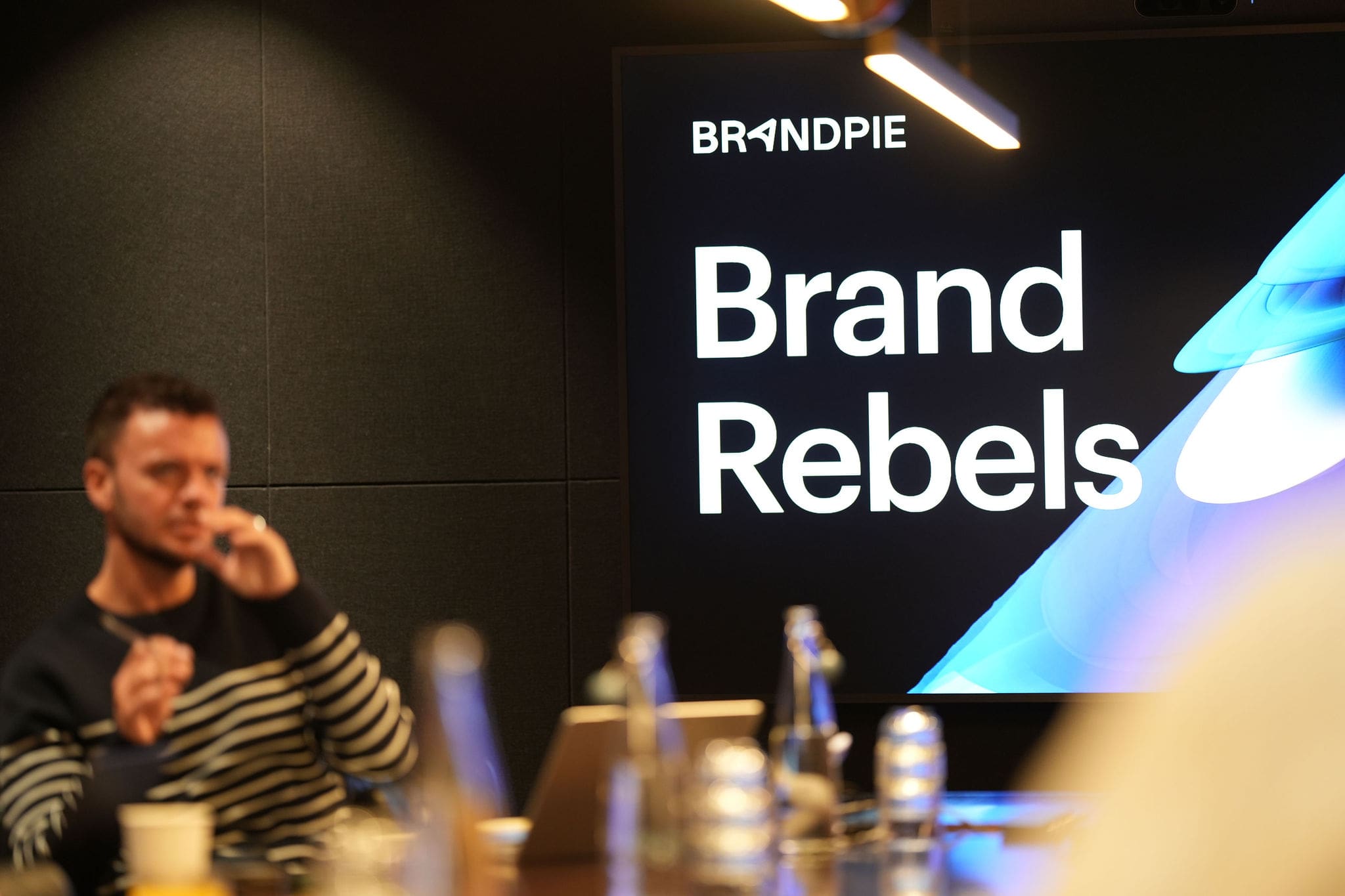
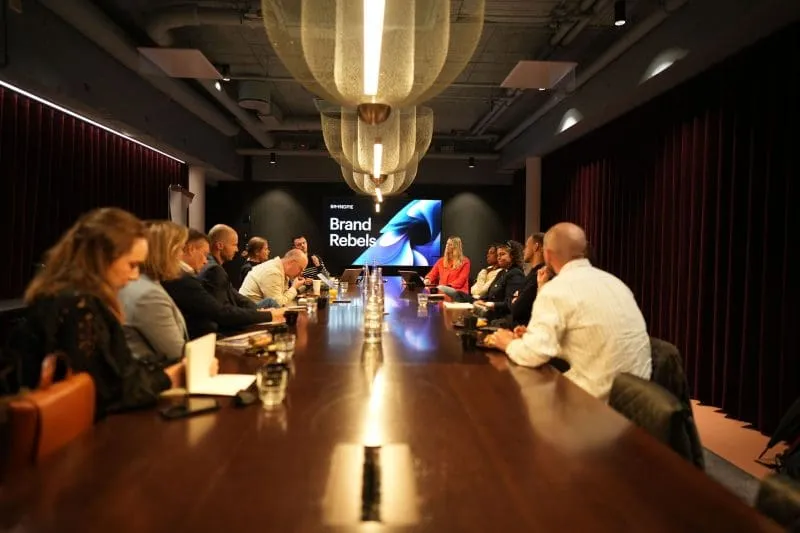
At our latest Brand Rebels roundtable with senior leaders in Oslo, these questions barely surfaced. AI is already in the work.
Leaders around the table are no longer discussing hypothetical applications. They were using AI to remove repetitive tasks, manage brand systems, monitor complex markets and accelerate work that previously took days.
The conversation had moved from if to where. And then to the much harder question: to what end?

Efficiency is not the same as advantage
The efficiency gains are real and significant. From applying brand standards more consistently to processing information and accelerating production – these are no longer interesting experiments running at the edges. They are becoming part of how brand teams operate, returning meaningful time and capacity to people who previously spent much of their week on manual execution.
But one tension ran through the conversation.
Being more efficient at managing a brand is not the same as building a better brand.
If anything, leaders are concerned that the more they leverage AI, the further they tip into a sea of sameness. More output does not necessarily create more meaning. Greater consistency does not guarantee greater distinctiveness. And removing friction from production can simple enable more average work, more quickly.
More so, many organizations increasingly have access to the same models, trained on the same internet, predicting the same next-most-likely word. As access to the same models and capabilities becomes universal, the increasing risk is that brands are beginning to converge: similar language, structures, ideas.
Everyone at the table could see it happening. Almost nobody could point to a brand it had made stronger.
One test kept surfacing, unprompted, in more than one conversation: could only we have written this?
Point of view before prompt
Leaders are clear that AI works best when it has something distinctive to work with.
That means human thinking cannot begin with the prompt. The organization first needs a clear point of view: what it believes, what it wants to change, what it is prepared to defend.
Being more efficient at managing a brand is not the same as building a better brand.
Without that foundation, AI tends to pull ideas towards the average. Making an underdeveloped thought sound finished before anyone has decided whether the thought is even worthy of pursuing.
For leaders in the room, the shift felt clear. It’s not “keep AI away from creative and strategic work”, but establish clear boundaries around the role it should play. Use it to challenge, explore, test, accelerate. But establish the point of view first.
The facts need protecting as much as the voice does
It’s not only distinctiveness and originality at risk. Facts need protecting too.
AI-generated work can be convincing, fluent, and wrong. This makes inaccuracies particularly dangerous. Mistakes may go unnoticed before they reach a customer, employee or senior decision-maker.
Leaders in the room shared examples of how they’re being more deliberate about verification. For higher-risk work, that might mean:
- Grounding AI in approved sources
- Retaining human ownership over facts or claims
- Recording where important information came from
- Defining which outputs require formal review
The same principle applies to judgement and talent, too. With AI absorbing the foundational work through which people learned, organizations need to create new ways for less-experienced colleagues to build their knowledge, competence and confidence. And above all else: critical thinking.
The work may disappear. The need to develop expertise and have accountability does not.
With AI absorbing the foundational work through which people learned, organizations need to create new ways for less-experienced colleagues to build their knowledge, competence and confidence. And above all else: critical thinking.
The opportunity
So what’s the real opportunity? Not more efficient AI use, that’s being solved everywhere already. It’s the harder question of what to do with the time and capacity it hands back.
Does it go toward becoming more distinctive, or just toward producing more, faster? Does it build a stronger case for the C-suite? Does it let you make fewer, bigger bets instead of a hundred small, forgettable ones?
Or can it be reinvested in:
- fewer, bigger moments that genuinely shift perception;
- stronger and more distinctive points of view;
- more compelling business cases for the C-suite;
- deeper customer and market understanding;
- work that creates human connection;
- the development of the next generation of talent?
This is where efficiency can become advantage. Not through the volume of content and work AI produces, but through the quality of the choices people make with the time it gives back.
Before we left the table, I asked everyone for two things to take home: one thing to protect, one thing to change. That’s the real output of a room like this – not a shared conclusion, but each person leaving with something specific to do differently on Monday.
The efficiency is real. But efficiency is rapidly becoming table stakes.
The organizations that gain an advantage will be those that use their newfound capacity to exercise better judgement, make braver choices and build brands that are more distinctive – not simply more productive.
Share this page
Want to join the rebellion?
Brand Rebels is an invite-only leadership for leaders who think outside the box. Bringing together senior brand, communication, and marketing leaders, we explore the role of brand in trust, culture, and long-term value creation.