Insight
From AI hype to human trust: what will define healthcare in 2026
As AI becomes universal, trust becomes healthcare’s most valuable currency.

Everyone has AI now. In healthcare especially, the conversation has shifted.
The next phase of AI won’t be won on technology alone. The strongest organizations will be the ones who can prove it works, have the infrastructure to support it, and, most critically, earn human trust.
From novelty to necessity
Not long ago, simply claiming to be “AI-powered” was enough to signal innovation. Today, that language barely registers. Health systems and healthtech companies are operating in an environment where AI is assumed, not admired.
This is why so many organizations are in the middle of pivotal brand refreshes. Not because their platforms suddenly changed, but because the market did.
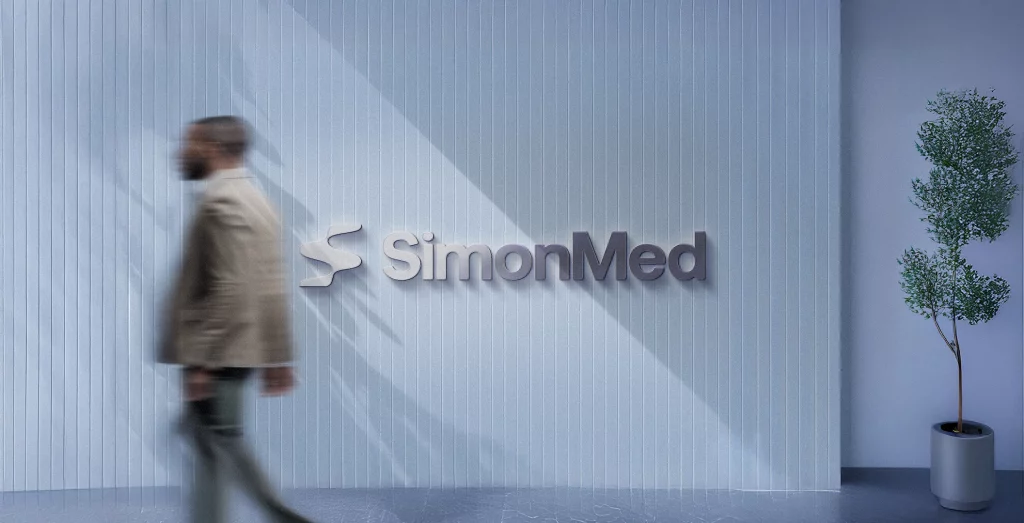
We see this clearly in our work with SimonMed. As healthcare shifts from treating illness to predicting and preventing it, SimonMed undertook a strategic pivot and brand repositioning to support its expansion into longevity. Powered by its strength as a healthtech leader – with AI enabled precision diagnostics at its core – the brand evolved to reflect a broader role in helping people take proactive control of their long term health.
When everyone has access to similar tools and capabilities, differentiation no longer comes from the machine itself. It comes from how AI is applied, governed, and experienced – by clinicians, patients, and partners alike.
The end of AI-as-headline thinking
The strongest healthcare brands aren’t selling the machine.
They’re clarifying where human judgment sits in the loop: in diagnosis, decision-making, and the moments of care that actually build confidence and trust. They understand that in healthcare, trust is the product.
Not long ago, simply claiming to be “AI-powered” was enough to signal innovation. Today, that language barely registers.
In this next phase, AI works best when it fades into the background:
• As the knowledge backbone,
• As invisible infrastructure,
• As a system that augments human ingenuity rather than replacing it.
The organizations getting this right are explicit about boundaries. They are clear about where AI supports clinicians, where it stops, and where accountability lives. That clarity, not capability alone, is what reassures patients, regulators, and staff. The system works best when paired with human ingenuity.
Why this changes everything for marketing
For marketing teams, this shift is profound.
As AI-generated content floods the web, verified human expertise becomes a premium asset. Buyers are burned out on black-box promises and sweeping claims. We are operating in a zero-trust environment, where proof consistently beats promise.
In healthcare, that means evidence-based marketing.
Case studies need to read less like sales assets and more like forensic reports: transparent, outcome-driven, and grounded in lived clinical reality. What changed? What improved? What didn’t? What was learned? Where possible, this means being explicit about operational and clinical impact – from earlier detection and improved decision confidence to practical measures like speed to diagnosis or time returned to care.
This kind of specificity doesn’t just build credibility but signals maturity. It shows that AI is embedded responsibly into real systems of care, not bolted on for optics.
Designing for humans, and machines
There’s one more reality check many healthcare organizations are only beginning to confront: humans aren’t the only ones reading your website anymore. AI agents are.
If models can’t clearly interpret your locations, service lines, clinical capabilities, or clinician credentials, they simply won’t recommend you. Ambiguity is a discoverability problem.
This puts renewed pressure on clarity, structure, and semantic precision across brand and content ecosystems. Traditional SEO is giving way to AI optimization, where structured, consistent and machine-readable brand data determines whether AI systems can confidently surface and recommend you. AI may be invisible to patients, but it is actively shaping how healthcare organizations are found, compared, and trusted.
As AI-generated content floods the web, verified human expertise becomes a premium asset. We are operating in a zero-trust environment, where proof consistently beats promise.
The bottom line
Ultimately, AI’s impact on healthcare branding is about confidence, not intelligence.
Confidence that systems are robust. Confidence that decisions are accountable. Confidence that humans remain firmly in control where it matters most.
The next generation of healthcare leaders won’t ask, “Do we have AI?” They’ll ask, “Can we prove it works, and can people trust us because of how we use it?”
This is exactly the challenge we designed AI Labs to address.
Our AI Labs workshops help leadership teams move beyond hype to practical, brand-led application, defining where AI creates value, where governance matters most, and how to articulate a credible, human-centered AI story in-market.
Because in healthcare, the future will belong to the organizations that know how to pair intelligence with trust.

About the author: MaryLee Sachs is Founder and CEO, Brandpie US.
She specializes in turning pivotal moments into success for clients across the U.S. and Europe, from global brands like P&G, AmEx, HSBC, and PepsiCo to fast-growth enterprises.
Share this page
Related Topics